
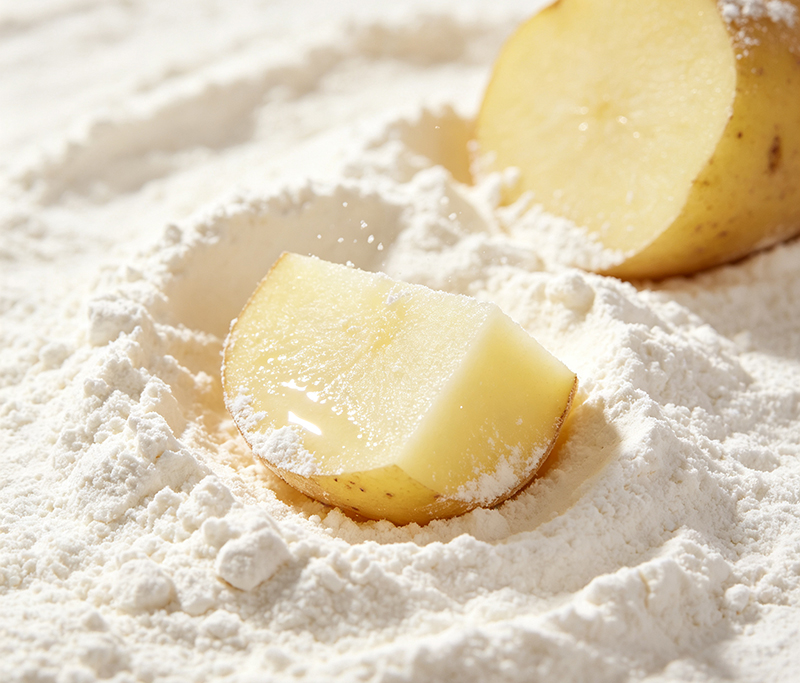
On the vast land of China, the potato is one of the agricultural crops with wide adaptability and high cost-effectiveness. From the arid plateaus of Inner Mongolia and the Gobi flats of the Northwest to the hilly mountains of the Southwest and the fertile plains of the Central Plains, the emerald stems and leaves and the underground tubers of potatoes can be seen everywhere. Undemanding of soil, fearless of heat or cold, and easy to plant and harvest, it is both a “wealth potato” for increasing farmers' income and a “security potato” for safeguarding food security, bearing the important mission of rural revitalization and agricultural development.
The planting advantages of potatoes are the core foundation for their nationwide popularity. As a crop typically resistant to cold, drought, and barrenness, potatoes have low requirements for their growing environment and a wide suitable temperature range. They can grow normally in high-altitude cool climates and arid areas with little rain, adapting to the natural conditions of most remote production areas in northern and southwestern China. Their growth cycle is short, allowing for one to two planting seasons a year. Field management is simple, and the incidence of pests and diseases is low, requiring no complex planting techniques or large inputs of agricultural materials, making it easy even for novice farmers to plant. At the same time, potatoes have stable yields and strong disaster resistance; compared to wheat and rice, they are less likely to suffer significant yield reductions due to drought, floods, or low temperatures, making them a stable crop for guaranteed harvests.
Scientific planting and harvesting are key to ensuring potato quality. Seed potatoes are the foundation for high yields. Before planting, seed potatoes free from rot, pests, and diseases, with full sprout eyes, must be selected. Reasonable cutting and sprouting can improve the emergence rate. During the planting process, water and fertilizer management must be controlled, and soil should be loosened and weeded moderately to ensure the nutrients and space needed for tuber expansion. The timing of harvest is particularly important; harvest should occur timely after the plant's stems and leaves turn yellow and the tubers mature. After harvesting, strict grading and screening must be conducted to remove rotten and diseased potatoes. Potatoes should be stored in a ventilated, dry, and cool environment to prevent dampness, rot, and quality damage, thereby extending the storage cycle.
Today's potatoes have long moved beyond the limitations of a “primary agricultural product,” forming a complete industrial chain and becoming a core industry for rural revitalization. On the basis of traditional planting, various regions rely on local advantages to cultivate varieties such as selenium-enriched potatoes and high-altitude cool-climate potatoes, creating characteristic agricultural product brands. From the primary sale of fresh potatoes to deep processing into potato chips, french fries, potato powder, starch, and prepared dishes, the added value of potatoes has increased significantly, extending into an integrated industrial system of planting, processing, sales, and logistics.
The humble potato connects the income growth of farmers in the fields on one end, and livelihood security and agricultural upgrading on the other. Rooted in the soil and growing silently, it creates high economic and social value with low planting costs. It is both a “ballast stone” guarding food security and a “gold nugget” aiding rural revitalization, continuously radiating an ordinary yet profound strength in the development of agriculture in the new era.