
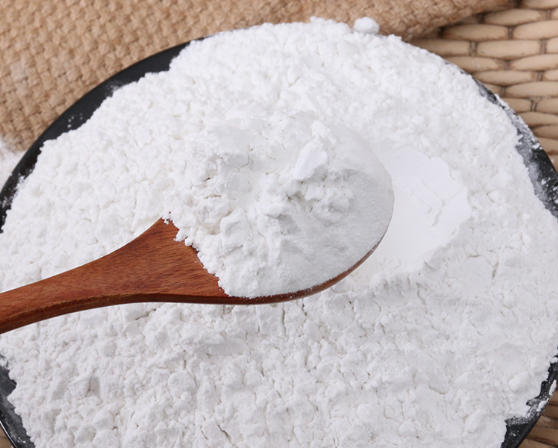
Small potatoes, undergoing a series of processes such as crushing, screening, sedimentation, dehydration, and drying, are transformed into snow-white and fine potato starch, linking up a complete industrial chain of planting, processing, sales, and by-product utilization, becoming an important pillar industry for rural revitalization in the dry farming areas of Northern China China News Service.
China's potato starch production capacity is highly concentrated, with regions such as Dingxi in Gansu, Ulanqab in Inner Mongolia, and Qiqihar in Heilongjiang gathering the vast majority of domestic processing capacity. The unique natural conditions of high altitude and large temperature difference between day and night cultivate processing-specific potatoes with high dry matter content, laying a raw material foundation for high-quality starch People's Daily Online Yunnan.... In the past, the industry developed in an extensive manner, only focusing on starch output. Potato residues, proteins, and juice water were mostly simply treated, resulting in serious resource waste. Nowadays, the circular economy model is becoming the mainstream of the industry.
Modern factories no longer rely solely on selling starch for profit. Potato protein extracted during processing can be used for feed and food additives; dehydrated potato residue is supplied to the aquaculture industry as a feed raw material; production wastewater is recycled or returned to fields after treatment, achieving "complete utilization." By-product revenue effectively hedges operational risks caused by raw material fluctuations, enhancing the enterprise's ability to resist risks.
Technological upgrades reshape product competitiveness. Intelligent production lines achieve fully enclosed production, strictly controlling indicators such as impurities, whiteness, and viscosity. The starch has good freeze-thaw stability, low gelatinization temperature, is gluten-free, and has a mild taste, making it an irreplaceable raw material for many foods. In addition to native starch, various modified potato starches are continuously being developed, expanding into industrial tracks such as pharmaceutical excipients, paper sizing, textile sizing, and biodegradable films, breaking the situation of being limited only to the food industry.
However, pain points still exist in the industry: raw materials are greatly affected by climate fluctuations, processing cycles are concentrated in autumn, with obvious seasonal production characteristics; low-end homogeneous competition still exists, and some small enterprises have weak quality control; the degree of branding is insufficient, with most products sold externally in the form of bulk raw materials.
The future development direction is very clear: upstream, promote improved seed breeding and standardized base construction to stabilize raw material supply; at the production end, adhere to green circularity and dig deep into the value of by-products; at the product end, vigorously develop high value-added products such as modified starch; at the market end, strengthen brand building and expand domestic and foreign markets, promoting the potato starch industry to shift from scale expansion to quality and efficiency improvement.